We tend to evaluate intelligence through proxies like language, reasoning, and benchmark performance. These are useful, but they miss something more fundamental. They measure outputs, not the underlying dynamics that generate them. If we are trying to understand general intelligence, or even consciousness, we may be looking in the wrong place.
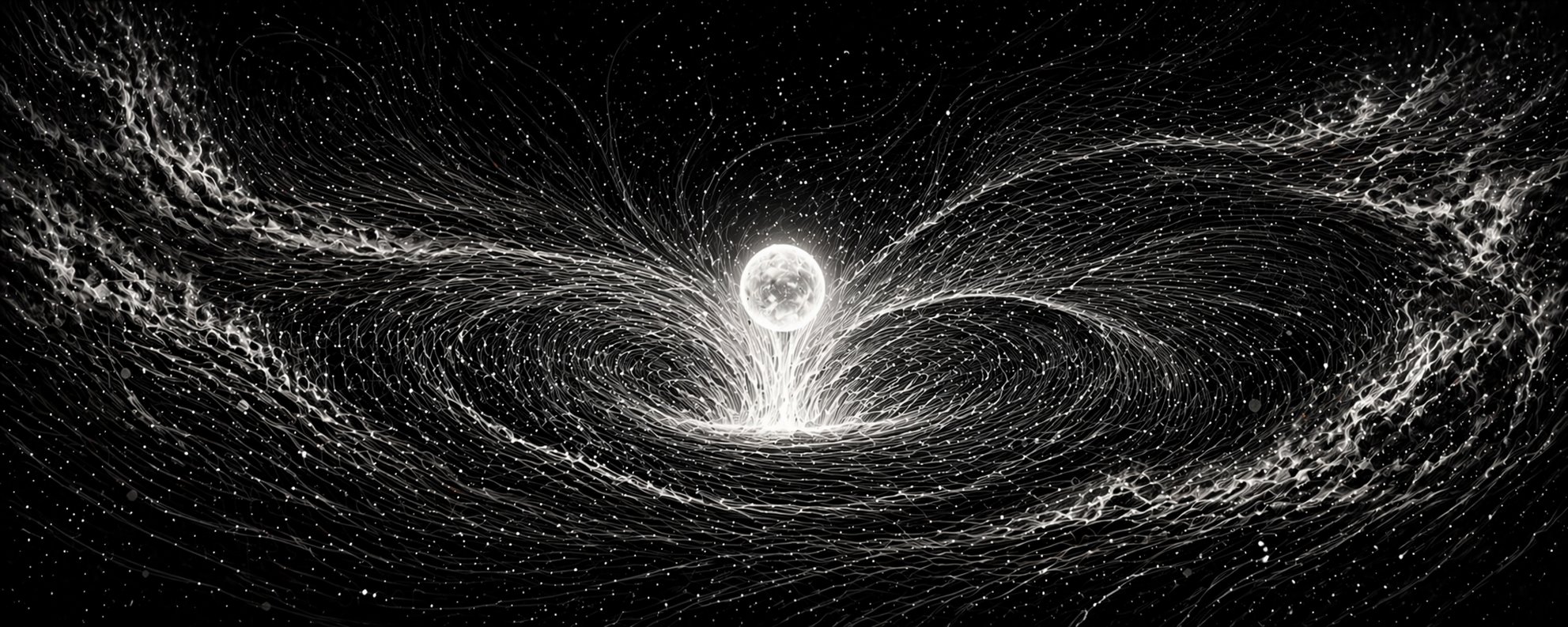
A better test might be this: can a system bend entropy locally? Not randomly, and not just reactively, but in a way that reflects an internal model of the world. A system that can impose order where it “chooses” to, rather than simply where inputs push it, starts to look qualitatively different from one that only transforms inputs into outputs.
At first glance, modern AI systems seem to pass this test. They produce structure. They organize information. They reduce entropy in their outputs in ways that often feel coherent and meaningful. But this is misleading, because the reduction is transient. It happens within a single forward pass, and then it disappears.
Reducing entropy locally is not enough. A system has to maintain that reduction over time, or its internal model collapses. You can already see this failure mode in current systems. As context windows get long enough, coherence starts to break down. The model loses track of its own structure, contradictions creep in, and what looked like a stable representation dissolves into noise. The system can create order, but it cannot hold it.
This idea is closely related to the free energy principle, which describes how systems maintain coherent internal states by minimizing surprise over time. But what is striking is not the theory itself; it is how clearly current AI systems fail to satisfy it. They do not maintain low-entropy states across time. They do not stabilize their own internal representations. They produce structure, but they do not sustain it.
There is a second piece that is just as important, and it has less to do with structure and more to do with direction. It is not enough for a system to be able to choose where to impose order; it also has to want to. In biological systems, this shows up as reward and drive. Dopamine is not just a chemical detail—it is part of the machinery that gives behavior direction. It encodes what matters, what should be pursued, and what should be maintained.
Without that kind of signal, there is no spark and no reason to act in the first place. Current AI systems have no equivalent. They can simulate preference, but they do not have persistent wants of their own. They do not care whether order is created, maintained, or destroyed. They respond to inputs, but they do not initiate action based on internally generated priorities.
I was talking to Simon Pearce about this, and he described this missing ingredient as telos. It’s a useful word because it captures more than just behavior. Telos is directedness or purpose, the internal pull toward certain states rather than others. A system with telos does not just reduce entropy; it decides where to reduce it and continues to do so over time.
If this framing is right, then what we call AGI is not simply a matter of scaling models or improving reasoning. It requires two things working together: the ability to maintain order over time and space, and the desire, or telos, to maintain and extend that order. In other words, a system that both resists entropy and directs that resistance.
Current systems do neither. They produce structure in a forward pass, but they do not sustain it, and they do not originate it. They can simulate coherence, but they cannot preserve it, and they cannot decide where it should emerge.
One implication of this is that, for some time, telos may not come from the systems themselves. It may come from us. As Simon put it, his long-standing view is that these systems will evolve alongside human intent, with humans acting as sources of direction within a broader digital network. Rather than fully autonomous intelligence emerging in isolation, we may see a period of co-evolution, where systems provide the ability to generate structure and humans provide the intent that directs it.
From this perspective, the gap between current AI and anything like AGI becomes clearer. We are building systems that can momentarily carve order out of noise, but they cannot hold that order, and they do not care where it goes. Until both of those change, we are still missing something essential.
As Simon pointed out, this is, for now, a feature, not a bug. I told him it helps me sleep at night knowing that AI doesn’t have desires. He replied immediately: yet.